
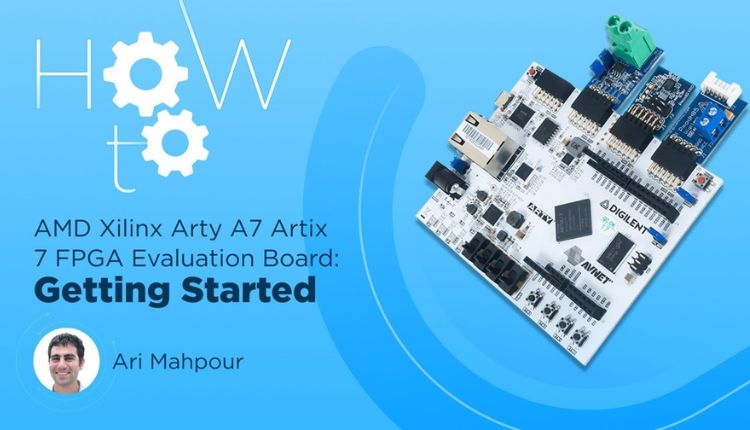
Designed by Digilent and built on the Xilinx Artix‑7 FPGA architecture, the Arty A7 provides a flexible platform for digital design projects, prototyping and hardware experimentation.
Introduction to Arta A7
Unlike traditional microcontrollers that execute instructions sequentially, FPGAs allow developers to create custom hardware circuits that run in parallel. This capability makes the Arty A7 particularly useful for tasks that require high performance, real-time processing, or hardware customization.
The board is designed to be user-friendly while still offering professional-level capabilities. It includes multiple I/O options, memory interfaces and communication ports, making it ideal for a wide variety of projects. Whether one is learning hardware description languages like Verilog or VHDL, building digital signal processing systems, or experimenting with embedded processors, the Arty offers a complete environment.
Many universities and training programmes choose the Arty because it balances cost, performance and ease of use. The board integrates basic components such as DDR3 memory, USB connectivity and programmable I/O pins. These features allow developers to design and test hardware solutions without the need for additional expensive equipment.
In recent years, FPGA technology has become increasingly important in fields such as artificial intelligence, telecommunications, robotics, and embedded systems. Development boards like the Arty make this advanced technology accessible to students and professionals alike. Combining powerful programmable logic with a convenient development platform, the Arty continues to be a popular choice for modern hardware development.
Key features of the Arty A7
One of the reasons the Arty A7 has become popular among FPGA enthusiasts is its rich feature set. The board contains everything needed to start experimenting with digital logic, embedded systems and hardware acceleration.
The board is based on the Artix-7 FPGA architecture, which provides high performance while maintaining relatively low power consumption. This balance makes it suitable for both academic learning and commercial prototyping.
Some of the most notable features include:
- Artix-7 FPGA processor for customizable hardware design
- DDR3 memory for high-speed data processing
- USB-JTAG programming interface for easy configuration
- Ethernet connection for network applications
- Multiple GPIO pins for connecting sensors, displays and external hardware
- SPI flash memory for storing FPGA configurations
- Arduino and Pmod connectors for hardware expansion
These features allow developers to create complex digital systems without the need for many additional components. Thanks to its modular design, the board is compatible with expansion modules and shields, allowing users to expand its capabilities depending on the requirements of their project.
Another important feature is its strong compatibility with development tools. Arty works seamlessly with FPGA design software to enable simulation, synthesis and debugging. This makes the development process smoother and more efficient for both beginners and experienced engineers.
Thanks to its flexibility and powerful hardware, the Arty can support projects from simple LED controllers to advanced embedded processors and communication systems.
Arty Hardware Architecture
Understanding the Arty A7’s hardware architecture helps developers take full advantage of its capabilities. The board is designed around a central FPGA chip that acts as a programmable logic device responsible for executing custom hardware designs.
The FPGA is connected to several important hardware components that enhance its functionality. One of the most important components is the DDR3 memory module. This memory provides high-speed storage for applications that require large data buffers, such as image processing or machine learning tasks.
The board also includes several communication interfaces that allow interaction with other devices. Ethernet support enables network connectivity, while USB provides both power and programming capabilities. The combination of these interfaces allows developers to create systems that communicate with computers, servers, or embedded devices.
Another important part of the hardware architecture is the input/output system. The Arty provides numerous GPIO pins that allow external components to be connected directly to the FPGA. These pins can be configured for various purposes, including digital input, digital output, or specialised communication protocols.
Power management is also carefully designed. The board contains voltage regulators and protection circuits that ensure stable operation even with complex calculations. This reliability is important for developers running long experiments or building embedded systems designed for continuous operation.
Overall, the A7’s hardware architecture offers a balance between performance and affordability. Its carefully designed layout allows developers to focus on building and testing their hardware logic, rather than worrying about complex infrastructure.
Programming and development environment for Arty
Arty A7 programming involves designing digital circuits using hardware description languages. These languages allow developers to define how the FPGA should behave at the hardware level.
The most common languages used with FPGA boards include Verilog and VHDL. These languages describe digital logic such as registers, combinational circuits, and state machines. Once the design is written, it is processed by the FPGA development tools, which convert the code into a configuration file that programs the FPGA.
The development workflow typically involves several stages:
- Writing hardware design code
- Simulating to verify functionality
- Design synthesis into FPGA logic
- Design implementation and routing
- FPGA board programming
This process may seem complicated at first, but modern development tools provide graphical interfaces and debugging features that make management easier.
Arty also supports embedded processor systems. Developers can integrate soft processors into the FPGA fabric and run software applications alongside hardware logic. This hybrid design approach combines the flexibility of software with the power of hardware acceleration.
Because the board supports a wide range of development tools and languages, it is suitable for both students and professional hardware engineers. There are many tutorials, online courses and documentation resources available to help beginners quickly get up and running with the Arty.
Arty A7 Application
The Arty A7 is used in many different areas due to its flexibility and performance. Engineers and researchers rely on FPGA boards to implement custom hardware solutions that cannot be easily achieved using traditional processors.
One of the most common uses of the Arty is in digital signal processing. Tasks such as audio filtering, image processing, and communication signal analysis benefit from the parallel processing capabilities of FPGAs.
Another popular application is the development of embedded systems. The board can host soft processors that control sensors, motors, and other hardware components. This makes it suitable for robotic projects and automation systems.
Educational institutions also make extensive use of the Arty to teach digital design concepts. Students can experiment with logic gates, state machines, and processor architectures using real hardware rather than simulations.
Typical applications include:
- FPGA learning and academic research
- Robotics and automation projects
- Digital signal processing systems
- Network and communication devices
- Hardware acceleration for computing tasks
- Prototyping of embedded systems
Because FPGA technology is used in many industries, working with the Arty provides valuable experience for students planning careers in electronics, computer engineering, or embedded systems design.
Advantages of using Arty
The Arty A7 offers several advantages compared to many other FPGA development boards. One of the biggest advantages is its balance between performance and affordability. This makes it accessible to students and hobbyists while still being powerful enough for professional prototyping.
Another big advantage is its compatibility with expansion modules. Developers can easily connect sensors, displays, communication modules and other hardware using Pmod connectors or Arduino headers. This flexibility allows the board to adapt to a wide variety of projects.
The board also provides strong community support. Many developers share open-source projects, tutorials, and troubleshooting guides online. This community knowledge base helps beginners overcome challenges and learn faster.
Other benefits include:
- Artix-7 high-performance FPGA architecture
- Reliable hardware design
- Simple USB programming interface
- Extensive documentation and tutorials
- Support for complex digital designs
Thanks to these advantages, the Arty remains one of the most recommended FPGA development boards for people entering the field of programmable logic.
We Start with the Arty
Getting started with the Arty A7 is relatively easy, even for beginners new to FPGA technology. The first step is to acquire the necessary hardware and software tools required for development.
After connecting the board to a computer via USB, developers can install FPGA development software that supports the Artix-7 architecture. This software allows users to create hardware designs, simulate them, and program FPGAs.
Beginners often start with simple projects like flashing LEDs or building basic digital counters. These projects help users understand the basic workflow of FPGA development and how hardware description languages work.
As users become comfortable with the platform, they can explore more advanced topics such as memory interfaces, communication protocols, and embedded processors. Many online tutorials guide users step by step through increasingly complex projects.
Another useful approach is to join FPGA communities and forums. Developers often share project files, troubleshooting tips, and optimisation techniques that make learning faster and more enjoyable.
With patience and consistent practice, beginners can quickly progress from simple logic circuits to advanced hardware systems using the Arty platform.
A7’s Future Potential in Hardware Development
FPGA technology continues to grow in importance as modern applications demand higher performance and flexibility. Boards like the Arty A7 play a significant role in helping developers experiment with new hardware architectures and innovative solutions.
One area where FPGA boards are becoming increasingly valuable is in the acceleration of artificial intelligence. While GPUs are commonly used for machine learning, FPGAs can provide customised hardware pipelines that specific algorithms for efficiency and speed.
Another promising area is edge computing. As devices become smarter and more connected, the need for real-time data processing directly on the embedded hardware is growing. Arty can support these systems by enabling a custom processing architecture tailored to specific tasks.
Telecommunications, aerospace systems, and industrial automation also rely heavily on FPGA technology. By providing a practical and accessible platform for learning and experimentation, the Arty helps prepare the next generation of engineers to work in these advanced fields.
As FPGA design tools become more powerful and easier to use, the barrier to entry for programmable logic continues to decrease. This trend is likely to lead to even greater adoption of FPGA development boards in education, research, and commercial product development.
The Bottom Lines
The Arty A7 is a versatile FPGA development board that offers a powerful platform for learning and building digital hardware systems. With its Artix-7 architecture, rich feature set, and strong development ecosystem, it provides everything needed to explore programmable logic and embedded systems design.
From educational environments to professional prototyping, the Arty supports a wide range of applications, including robotics, signal processing, networking and hardware acceleration. Its balance of performance, affordability and flexibility makes it an excellent choice for both entry-level and experienced engineers.
As technology continues to evolve, FPGA boards like the Arty will remain important tools for innovation and experimentation in modern electronics.
Frequently Asked Questions
What is the Arty used for?
The Arty A7 is primarily used for FPGA development, digital design instruction, embedded system prototyping, and hardware acceleration projects.
Is the Arty suitable for beginners?
Yes. The board has good documentation, tutorials and community support, making it a good starting point for learning FPGA programming.
What programming languages are used with the Arty?
When designing FPGA circuits for the Arty, developers typically use hardware description languages such as Verilog and VHDL.
Does the Arty support embedded processors?
Yes. Developers can integrate soft processors into the FPGA fabric to create embedded systems that combine hardware and software.
Why is FPGA development important?
FPGA development allows engineers to create custom hardware architectures optimized for performance, efficiency, and specialized computing tasks.